The candidate I have to turn away
Before every assessment, I know I'm going to have to turn away someone I actually liked. Because they can't fly to save their life.
So overwhelmed in the sim they can't tell me their name when I ask. The session goes on and sadly, there's no improvement.
The story behind it is always the same. They rushed through training and never built past the bare minimum they were signed off on. Or they finished, waited a year or two for an airline job to open up, and did nothing flying-wise in the meantime.
I'm really not supposed to, but occasionally I pull them aside afterward and give them the only useful thing I've got:
Get a flying job
And they nearly always say the same thing back: this is the flying job. This is the one I trained for.
It isn't. Airline flying is a project-management job with an aircraft attached to it. The flying job is general aviation: instructing, surveying, air taxi and the like, in less glamorous airplanes and environments. It's the hours where you learn the flying bit that you need for the management job.
Nobody put that in the flight school brochure. The skill needs to be built before the airline job and not during. You're supposed to arrive with it.
If your only goal is an airline job and the industry isn't keen on low-hour cadets, get any flying job you can put your hands on. That is your route to the airline.
Flight instructing. I firmly believe, to this day, that flight instructors make excellent pilots. They develop interpersonal skills and hand-flying skills. It isn't the best-paid or the most glamorous job, but there are so many transferable skills gained there. An overwhelmingly high percentage of the flight instructors I've assessed got hired. My gut feeling says around 90%.
There is demand. Funnily enough, flight schools stay busy even when the airlines go quiet. When people see the news about airlines making record profits, suddenly everybody wants to be a pilot, and those students need instructors whatever the hiring market is doing.
Survey flying, special missions, air taxi. All really good ways of building experience.
Corporate. A small, constrained world that runs on networking. More on that below.
The cadet who drove to Vienna
In late 2017, Air Berlin filed for insolvency, and the European market was immediately flooded with hundreds of highly experienced, type-rated pilots. We were running recruitment roadshows across Germany and in Vienna, specifically targeting these displaced commanders and senior first officers. We were not looking for cadets.
A few days before Christmas, our recruitment team was presenting to a room full of senior pilots in Vienna. As the presentation ended, two younger gentlemen approached us. They were low-hour Belgian cadets who had driven all the way from Belgium to Vienna to attend an open day that was explicitly not targeting their experience level.
One of them, let's call him John, was building experience flying a Cessna Caravan in Rwanda, transporting forestry workers. He was based at a remote dirt strip in the forest, with a diesel generator providing electricity for a few hours a day. Not exactly the most glamorous way to build hours.
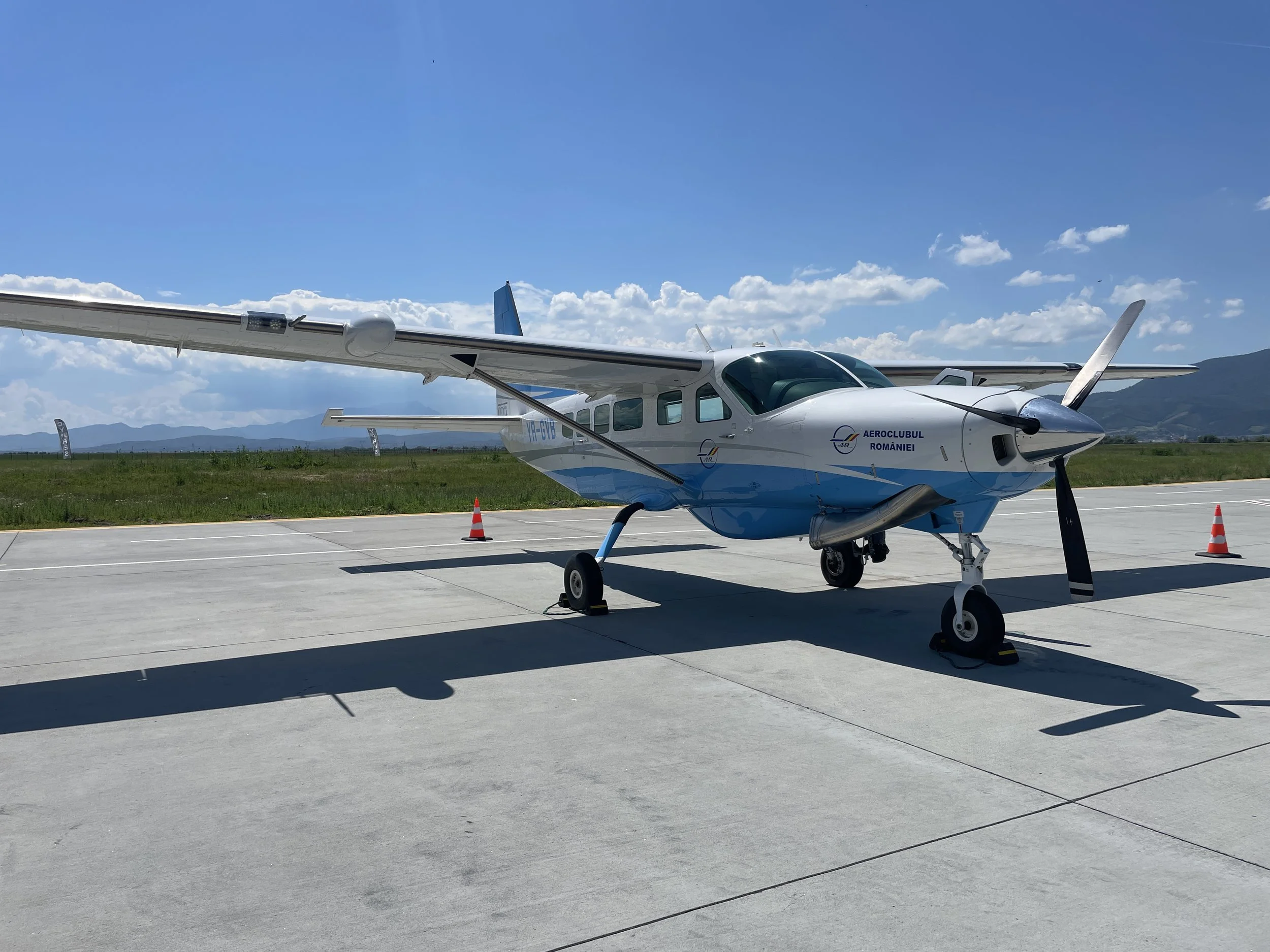
The Cessna Caravan: it will haul whatever you can fit in it.
Actions are the best indicators of someone's character. We offered him an interview slot at his convenience, even though we were already well provided with standard cadet CVs. I was fortunate enough to conduct his assessment. His knowledge and basic handling skills were excellent for his level of experience. More importantly, his integrity, attitude and humility toward the profession were in perfect cohesion with his backstory.
John remains one of my all-time favourite examples of a fundamental aviation truth: even in industry downturns, those who actively work at their professional development and are not afraid to take chances will be rewarded.
Where are the flying jobs?
You have sent hundreds of applications and got about two replies back, all rejections. You are missing most of the available flying jobs out there.
Imagine the scene: a pilot at a small operator retires. The manager is in full firefighting mode. They will not put out an advert for one opening. They will either walk out to the flightline and grab the only rated pilot already working for them, or, lacking that, they will call the first pilot they know.
Only large airlines with recruitment and marketing budgets organise formal recruitment drives where you are expected to send in your CV. Operators with fewer than 30 aircraft just hire the pilots they know. The corporate world works the same way. If they have one pilot missing, they ask their friends and pull in the first pilot they know.
So instead of canvassing the world with CVs, go and become one of the pilots they know.
Get a foot in the door at a local operation. Any role that gets you inside and on the flightline, so when a seat opens you are already there.
Make the local airport community your hobby. Go out to the airfield, sit around, and you will invariably meet someone who will gladly take you up, give you some time at the controls, even trust you with a bit of ferrying. Be there on the weekends, whenever you have free time.
Start talking to corporate pilots, whether on LinkedIn or at your local flight school.
Anything beyond driving distance? A phone call or a conversation with an actual person often works wonders.
You can still send your CV to the roughly five airlines that advertise. For the other 95 operators, just make yourself known.
Why every hour counts
Does 500 hours beat 250? Yes, for a couple of reasons. Experience matters to recruiters, even between 250 and 500 hours, and every hour moves your CV higher up the pile. The assessment also gets much easier, because you will have the hand-flying skills it requires. And it signals that you take aviation seriously: somebody trusted you with their airplane, no matter how small. Most importantly: during linetraining, I can immediatelly tell the difference between someone with minimum hours and someone with 500 hours. Instead of nerves, experienced pilots arrive with confidence and familiarity.
Recency. The airline industry values recency like it's the elixir of eternal youth. Every application asks how many hours you have flown in the last 12 months. If you're actively flying, you can confidently put 200 hours there. Guess who gets invited: the pilot with real hours in the last year, or the one with 200 hours total and a zero in that column?
What about the 500 hours on CS-25 aircraft some airlines ask for? If you can get a job on a bigger, CS-25 aircraft, absolutely take it. It will not hurt you. But don't let the requirement stop you flying something smaller. These requirements are man-made, and when hiring starts, the CS-25 condition is the first thing to go. Any experience counts.
If you're older. Age bias is real, especially in who gets invited to an assessment. But age is always viewed in relation to experience. If you're 36 with 1,000 hours, you're not competing with 200-hour cadets anymore. You're a league above. That works for anyone with low hours: get the flying job that gives you the most hours, and the world will look very different when hiring picks up.
I can't take a flying job other than the airlines.
Some of you will tell me you can't, because of money or family commitments. Let me challenge that.
If you're holding back because you expect the airline job to start paying the big bucks straight away, don't let that expectation hold you back. For the first couple of years you will be on a reduced salary, because you'll be paying back your bond or purely because of being low on seniority. You might not fly as much either, because of training bottlenecks. So if money is an issue now, it will be an issue when you start airline flying as well, especially in the first few months to a year. As an active and fairly busy flight instructor, you will make similar money to an airline pilot in that first year. So get flying. Make the money work.
Family is the same story. Remember that as an airline pilot, there will be times when you have to relocate, commute long distances and upset your family life. Only a very small percentage of airline pilots can fly from where they're from or where their family is established. So might as well take the plunge now.
If you really can't, then fly whatever and whenever you can. A lot of times flying means going to the airfield and hitching a ride with someone, making friends with an aircraft owner, or getting a timeshare. If you're working another job, putting money aside for a couple of hours a week in a Cessna 150 is still worthwhile. Anything to get you in the air.
The next best thing.
The second thing I'd suggest is a flight simulator at home. I hope I'm not going to offend anyone, but every flight simulator enthusiast I've interviewed and assessed was absolutely incredible in the sim. They had never flown a 320, but they knew their way around the switches. I gave one of them a full OPC on his assessment, with engine failures, V1 cuts, single-engine landings and go-arounds, and he was as good as airline ready. Literally airline ready.
Use it the right way. Plan an IFR flight and fly it. Practise your IFR training manoeuvres over and over for fluency, rather than memorising the assessment profile you read about online. What gets people through the sim stage is spare mental capacity, and that comes from instrument scanning and a familiarity with pitch and thrust that you can only build by repetition.
Be ready before the invitation comes
When hiring restarts, it won't be gradual. Recruitment departments are more haphazard than you think. Management sends the message that they need 100 pilots by yesterday, the invitations go out, and it's quite common for candidates to get theirs a week before the assessment.
A week is not enough to become a pilot. Your licence only proves you passed a test once. The assessment checks whether you can do what it says you can.
Here's a test. If I told you right now to fly from East Midlands (EGNX) to Glasgow (EGPF) in the multi-engine airplane you are most familiar with, could you prepare and file an IFR flight plan, calculate your weight and balance, and fly yourself on three hours' notice? If you can't, you're probably not ready for an airline assessment.
The pilots who keep flying get hired sooner and walk in sharp. Whatever it takes, keep flying. The airlines always come around.