High fuel prices have forced every airline to pull back capacity. They have cut their outlook for 2027, even 2028, as they are preparing for the absolute worst. Less capacity means they have a surplus of pilots.
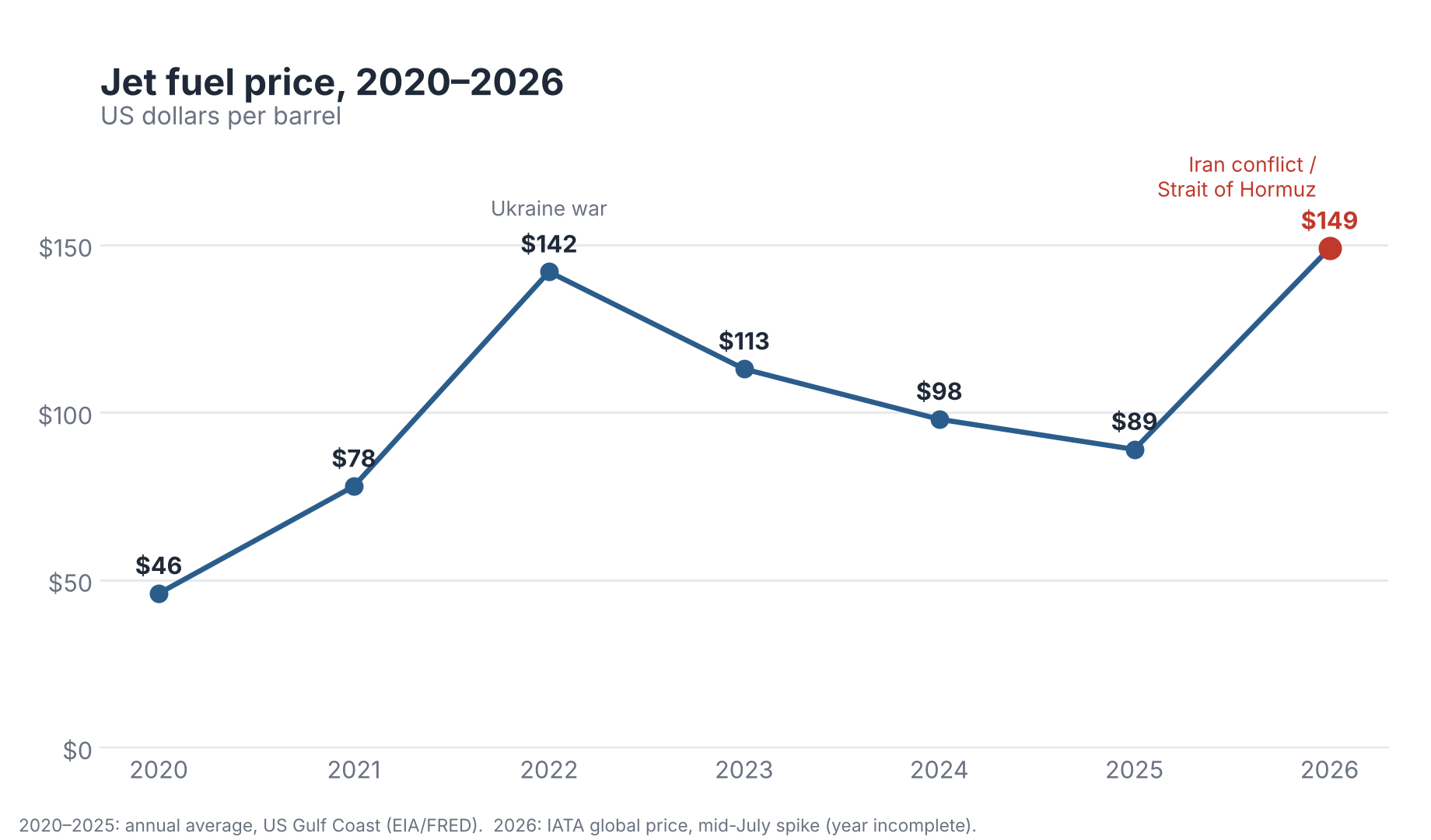
The main driver behind the 2026 hiring freeze.
If an airline has a surplus of pilots, there is no movement between them. Nobody leaves, so no seats free up. The one thing that still creates vacancies is retirement.
Who is still hiring?
The legacy carriers, the long-standing historic ones with a large retiring workforce, are still hiring. But now they have plenty to choose from so they keep raising the barriers of entry: in 2025 it was 500 hours on type, a couple of months ago 1,500 hours and now I start to see 2,000 hours and often the requirement for command time.
The shift
During the expansion after COVID airlines tried to fill as many seats as they could. They had massive fleet orders, severed training pipeline and they hired everyone with a pulse and a licence. The barrier of entry was simply being average and capable of doing the job. Now they are only replacing retirees, and they have loads of candidates to choose from.
A market full of pilots
Qualified candidates are everywhere. Airlines are going bankrupt. Schools are churning out cadets like there is no tomorrow. There are no upgrades or movement between the low-costs. The market is full of pilots, and airlines are now at the liberty of filtering candidates aggressively.
They only invite the ones with the most hours, the most recent, the best CVs. Those who made it to the assessment, only those with the really impressive interviews, outstanding performance in the sim will get the job.
The time of the Chuck Yeagers
Remember Chuck Yeager? The first man to break the sound barrier, and one of the finest test pilots who ever lived. He never flew in space. He was not even considered for the astronaut programme, because he did not have a college degree.
That had nothing to do with his abilities. It was a filter, and it only existed because there were more qualified pilots than seats. If there had been commercial moon missions and not enough astronauts to fly them, the degree requirement would have disappeared and Yeager would have become an astronaut. The bar was there to thin the field, nothing more.
That is exactly what is happening right now. The rising hours bar is the same filter, there to ration a handful of seats among hundreds of capable pilots, and to screen some of them out before anyone looks at how they actually fly.
Just being average, just showing up, just having the qualifications what worked well between 2022 and 2025 does not work anymore. If the candidate next to you flies better and knows more, has a more impressive background, they get the job.
Its always the top 30%
Take the period right after COVID. When the airlines were slowly waking up, we had plenty of high-experience, very capable candidates for a handful of positions. You would think our assessment pass rate would climb. It didn’t. It stayed at 30%. Even among the most experienced, only the very best got the few seats on offer.
This is the reality right now. It will last as long as the fuel prices stay high with the outlook bleak, and it will only get fiercer as more airlines go bankrupt.

The pilots of this F-18 were selected out of thousands of equally capable candidates.
What you can control
The key is to differentiate yourself. You could have 10 thousand hours, the same as the pilot next to you. The only thing that wins you the job is presenting yourself better, flying the sim better, and doing everything better than them.
This is where you can prepare now. Once hiring picks up, this state will remain even after the industry bounces back. There will be a huge backlog of pilots to work through, and as long as that surplus exists, nothing changes. The bar stays exactly where it is.
So it is imperative that you prepare. It is imperative that you stand out even at the application stage no matter how many hours and type ratings you have.